Let's start
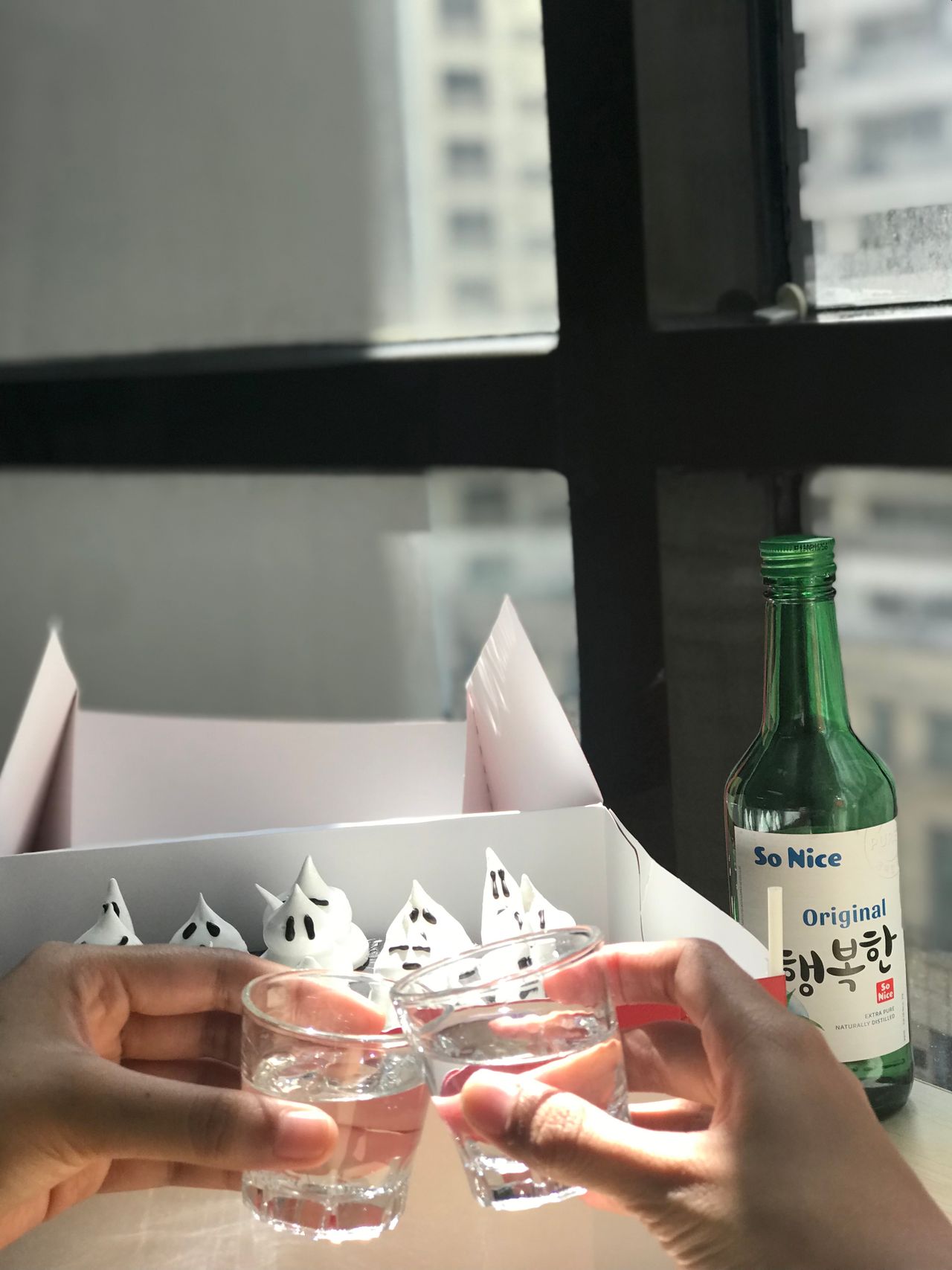
If you’ve ever watched a Korean drama, joined a night out in Seoul, or sat around a table with a bottle of soju, you’ve probably noticed one thing: drinking in Korea is often about much more than the drink itself.
Korean drinking games are a big part of the social experience. They help break the ice, bring groups together, and turn an ordinary night out into something much more interactive.
Some games are based on numbers. Others rely on rhythm, speed, memory, timing, or quick reactions. And while many are traditionally played with soju or beer, alcohol isn’t actually required.
In this guide, we’ll show you 15 popular Korean drinking games, explain the rules, and walk you through how to play them.
Guide tip
As a guide hosting Korean Drinking Games Nights in Seoul, I’ve learned that it’s a fun way to break the ice, make new friends, and experience an authentic part of Korean social culture together.
Whether you’re planning a night with friends, visiting Korea, or simply curious about Korean drinking culture, here’s how to get started.
Table of contents
01 What Are Korean Drinking Games?
02 15 Popular Korean Drinking Games
03 Popular Soju Drinking Games in Korea
04 Korean Drinking Games for 2 People
05 Can You Play Korean Drinking Games Without Alcohol?
06 Korean Drinking Game Rules & Etiquette
07 Want to Play Korean Drinking Games in Seoul?
08 Final Thoughts
09 Korean Drinking Games: Quick FAQ
What Are Korean Drinking Games?
Korean drinking games are social games commonly played during group dinners, university nights out, parties, and evenings involving soju, beer, or somaek — the popular Korean mix of soju and beer.
Many of these games are designed around rhythm, counting, hand gestures, memory, quick reactions, and reading the other people around the table.
The person who loses a round may traditionally take a drink, but drinking alcohol isn’t essential to playing the games.
The penalty can easily be replaced with a soft drink, water, a point, a harmless challenge, or simply losing the round.
The game and the group interaction are usually more important than what’s in the glass.
Why Are Drinking Games So Popular in Korea?
One reason these games work so well is that they give everyone at the table something to do together.
Instead of relying entirely on conversation, the game becomes an instant icebreaker.
That can be especially useful when people have only just met.
Many games are simple enough to understand within a few minutes but become progressively harder once the group gets faster and more competitive.
As a host, I’ve watched complete strangers become friends after just a few rounds — that’s the real magic of Korean drinking games.
Do You Need to Drink to Play Korean Drinking Games?
No.
Soju is strongly associated with Korean nightlife, but you don’t need alcohol to participate.
You can play with soju, beer, somaek, soda, juice, water, or no drink at all.
I’ve hosted plenty of non-drinkers too – the fun comes from the people, not what’s in your glass.
15 Popular Korean Drinking Games
Let’s get to the games.
We’ll start with one of the most internationally recognizable Korean drinking games right now.
1
APT Drinking Game
APT, pronounced roughly apateu, comes from the Korean word 아파트, meaning apartment.
The game is built around a stack of hands representing the floors of an apartment building.
How to play: players gather around a table and stack their hands in the middle. A target floor is chosen, the group chants “apateu, apateu”, and hands move through the stack while the floors are counted.
The player whose hand lands on the target floor loses the round in the common version.
Important: APT has different house rules, so the exact hand sequence and penalty can vary between groups.
Guests often sing along to ROSÉ and Bruno Mars’s hit “APT.” while playing, which makes the game even more energetic.
2
3-6-9 Korean Drinking Game
3-6-9, or Sam-Yuk-Gu, looks incredibly easy at first.
Players simply count upward.
There’s one catch:
You cannot say a number containing 3, 6, or 9.
Instead, you clap.
For example:
And it gets harder.
For 33, you clap twice because the number contains two target digits.
A player loses if they say a number when they should clap, clap incorrectly, use the wrong number of claps, or hesitate for too long.
Simple rules. Surprisingly easy to mess up.
What confuses guests most is that you don’t clap for every multiple of three. You clap only when the number contains 3, 6, or 9.
3
Soju Bottle Cap Game
The Soju Bottle Cap Game is one of the easiest Korean games to try because the only equipment you need is a bottle of soju.
When a bottle is opened, the metal strip attached to the cap can be twisted into a narrow stem.
Players then take turns trying to flick it.
The round continues until someone finally breaks the strip off.
Who drinks afterwards depends on the group’s rules.
Want to impress your date? You can turn the broken bottle-cap pieces into a tiny heart — just ask me during the game, and I’ll be happy to show you how.
4
Titanic Drinking Game
The Titanic Drinking Game gets its name from one inevitable outcome:
the shot glass eventually sinks.
You’ll usually need a larger glass with beer, a small soju glass, and soju.
The empty soju glass floats inside the larger glass.
Players then take turns carefully pouring small amounts of soju into it.
With each pour, the shot glass becomes heavier.
Eventually, it sinks.
In the common version, the person whose pour causes the glass to sink loses the round.
This game can be seriously nerve-racking.
You never know which pour will finally make the glass sink.
5
Baskin Robbins 31
Don’t worry – no ice cream is required.
Baskin Robbins 31 is a strategic counting game where players try desperately not to be the person who says 31.
Players count upward from 1.
On each turn, a person can say one, two, or three consecutive numbers.
The game continues until someone is forced to say:
31.
That player loses the round.
It sounds like luck until everyone starts working out the strategy.
6
Nunchi Game
The Korean concept of nunchi is often described as the ability to read the room.
And that’s basically what this game tests.
There is no predetermined turn order.
Players must count upward, but anyone can say the next number.
Another person:“Three!”
The problem is that if two players call a number at the same time, they lose.
In many versions, the final person who hasn’t called a number also loses.
The challenge isn’t mathematics.
It’s deciding:
“Is someone else about to speak?”
7
Bunny Bunny
Bunny Bunny is where things start becoming considerably more chaotic.
The active player performs the Bunny Bunny gesture and passes the role to another person.
The people immediately beside the active player also have supporting gestures or chants.
That means multiple people need to react correctly at exactly the right moment.
Someone who misses their cue, performs the wrong gesture, points to the wrong player, or breaks the rhythm loses the round.
Watch the whole group, not just the active player — the bunny can jump to you faster than you expect.
8
Strawberry Game
The Strawberry Game, or Ddalgi Game, combines rhythm, hand movements, and repetition.
Players maintain a beat while saying ddalgi — Korean for strawberry — according to the pattern of the round.
The number and placement of repetitions change as the sequence progresses.
Miss the rhythm or say the wrong sequence and you lose.
This one is much easier to understand when you see it played than when you read the instructions.
9
Image Game
The Image Game is less about reflexes and more about what everyone thinks of each other.
A player gives a prompt such as:
“Who looks most likely to miss their flight tomorrow?”
Everyone points to the person they think fits the description best.
Depending on the version, the person receiving the most votes may lose the round.
House rules vary considerably for this game.
10
Hello Cleopatra
Hello Cleopatra is essentially a vocal challenge.
Players repeat the same phrase, but every new person must say it at a higher pitch than the person before.
As the pitch climbs higher, things become increasingly ridiculous.
Eventually someone can’t go higher, cracks their voice, loses the phrase, or breaks the sequence.
That person loses.
This one doesn’t even need alcohol to become chaotic.
11
King Game
In the King Game, players receive hidden numbers while one person becomes the King.
The King can then choose numbers and give them an instruction without necessarily knowing who has those numbers.
For example:
“Number 2 and Number 5 have to do a dance challenge.”
The hidden identities create the fun.
Keep commands light, consensual, and harmless.
12
Son Byeong-ho Game
This game starts with everyone holding up five fingers.
Players take turns making statements that apply to some members of the group.
Anyone who matches the statement puts down a finger.
The first person to run out of fingers loses.
It’s somewhat similar to games built around “Never Have I Ever”, but the format allows players to target all kinds of funny or harmless characteristics.
This game is perfect for getting to know each other.
13
Cham Cham Cham
Cham Cham Cham is a quick reaction game played between two people.
One player points either left or right while the other turns their head.
The goal depends on the version, but the core challenge is trying to avoid matching the direction of the pointing gesture.
It’s fast, simple, and easy for the rest of the table to watch.
14
Game of Death
Despite the dramatic name, this is essentially a pointing and counting game.
Players point toward another person, creating a chain around the group.
A number is chosen and players follow the direction of the chain while counting.
The person reached on the target number loses.
The most exciting part is that you never know who will lose until the very last second.
15
Host's Choice
Titanic Drinking Game – I enjoy teaching and playing with guests the most during Korean Drinking Games Night.
This is my favorite game to introduce during Korean Drinking Games Night. I love how quickly it gets everyone involved, laughing and feeling like part of the group – even if they’ve only just met.
Popular Soju Drinking Games in Korea
If you’re specifically looking for soju drinking games, some of the easiest ones to associate with a bottle of soju are the Soju Bottle Cap Game, Titanic, APT, 3-6-9, and Baskin Robbins 31.
Not every Korean drinking game requires soju.
In fact, most of the games on this list can be played with any drink — including non-alcoholic ones.
Korean Drinking Games for 2 People
You don’t necessarily need a huge group.
Several Korean drinking games for 2 people still work well.
Good options include 3-6-9, Baskin Robbins 31, Soju Bottle Cap, Titanic, and Cham Cham Cham.
Rhythm games such as Bunny Bunny tend to work better with larger groups because much of the fun comes from multiple players reacting simultaneously.
Can You Play Korean Drinking Games Without Alcohol?
Absolutely.
Alcohol isn’t required for the games themselves.
Instead of drinking, losing a round can mean taking a sip of water or soda, earning a point, completing a funny challenge, or simply restarting the game.
This also means a group can easily include drinkers and non-drinkers together.
Some people don’t drink for health, religious, or personal reasons and that’s completely okay. You don’t need alcohol to join Korean drinking games and have just as much fun.
Korean Drinking Game Rules & Etiquette
There’s one rule worth remembering before all the others:
Ask which version the group is playing.
Many Korean drinking games have different house rules.
Don’t pressure someone to drink alcohol, explain the rules before starting, expect local variations, and keep penalties fun rather than uncomfortable.
The best drinking game is the one everyone at the table actually wants to play.
Want to Play Korean Drinking Games in Seoul?
Reading the rules is useful.
Playing them around a table with other people is a completely different experience.
Not ready to head home when the tour ends? Travelers who want to keep the night going can join our after-party in Hongdae and experience Korean nightlife beyond the games.
Experience Korean Drinking Games in Hongdae
Join a local Korean Drinking Games Night and experience the games as part of a real night out in Seoul.
Final Thoughts
Korean drinking games are ultimately social games.
The rules give everyone something to focus on, but the memorable part is usually what happens when somebody forgets a number, misses a beat, points in the wrong direction.
From APT and 3-6-9 to Titanic and Bunny Bunny, each game offers a slightly different glimpse into Korean social culture.
I enjoy introducing these games to travelers because they make it so easy for people to connect. Even guests who arrive not knowing anyone often end up laughing, talking, and feeling like part of the group after just a few rounds.
Korean Drinking Games: Quick FAQ
What are Korean drinking games?
Korean drinking games are social games commonly played during nights out, group dinners, university gatherings, and parties in Korea. Many involve rhythm, counting, hand gestures, memory, or quick reactions.
They are often played with soju or beer, but most games can also be played without alcohol.
What are the most popular Korean drinking games?
Some of the best-known Korean drinking games include APT, 3-6-9, Soju Bottle Cap, Titanic, Baskin Robbins 31, Nunchi, Bunny Bunny, Strawberry Game, and Hello Cleopatra.
Popularity can vary depending on the group, generation, and current trends.
Do you need alcohol to play Korean drinking games?
No.
Alcohol isn’t necessary for the games themselves. You can replace the drinking penalty with water, soda, points, or another harmless challenge.
What Korean drinking games can you play with two people?
Good Korean drinking games for two people include 3-6-9, Baskin Robbins 31, Soju Bottle Cap, Titanic, and Cham Cham Cham.
Some larger rhythm games are more fun with a bigger group.
What drinking games do Koreans play with soju?
The Soju Bottle Cap Game and Titanic are especially connected with soju. Other Korean drinking games such as APT, 3-6-9, and Baskin Robbins 31 can also be played during a soju night.
What is the easiest Korean drinking game for beginners?
3-6-9 and Baskin Robbins 31 are good beginner games because they need almost no equipment and the basic rules can be explained quickly.
Do you need to speak Korean?
No.
Many Korean drinking games rely on numbers, gestures, rhythm, and simple instructions. Knowing the Korean names and chants can make the experience more authentic, but you don’t need to speak Korean fluently.